HEALTHCARE AI PLATFORM
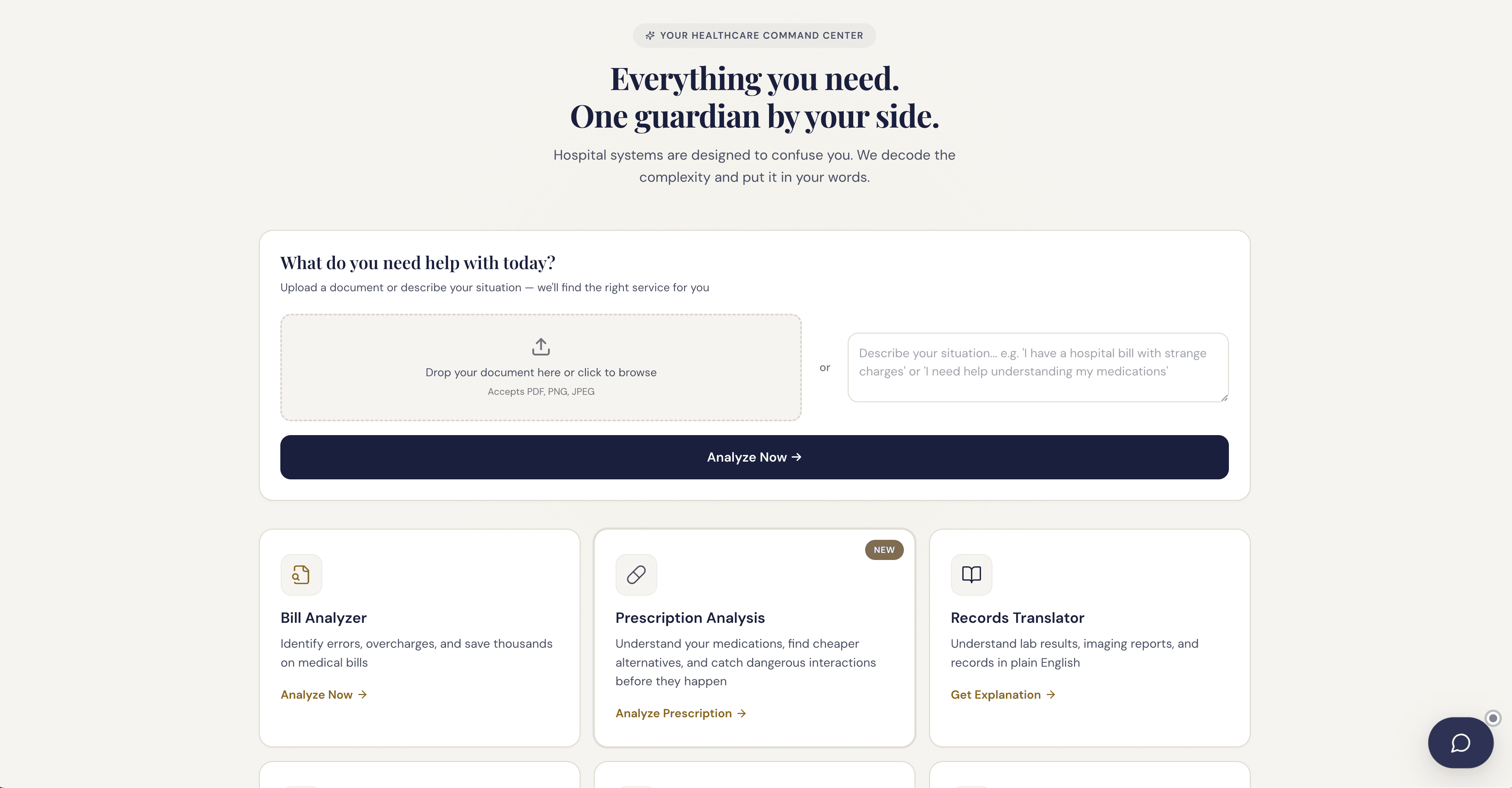
A healthcare AI platform built in Bolt.new: 7 services powered by the Anthropic API, a Guardian assistant, and one system designed to feel clear and usable.
THE CHALLENGE
The client needed a production-ready healthcare AI platform without a traditional development team or long timeline. The platform had to handle sensitive medical data, comply with healthcare communication standards, and launch live from day one. Design scope included UX, API integration, legal compliance, and deployment.
THE APPROACH
I used Bolt.new as the development environment and the Anthropic Claude API as the intelligence layer. That meant owning decisions that normally sit across product, development, and legal at the same time.
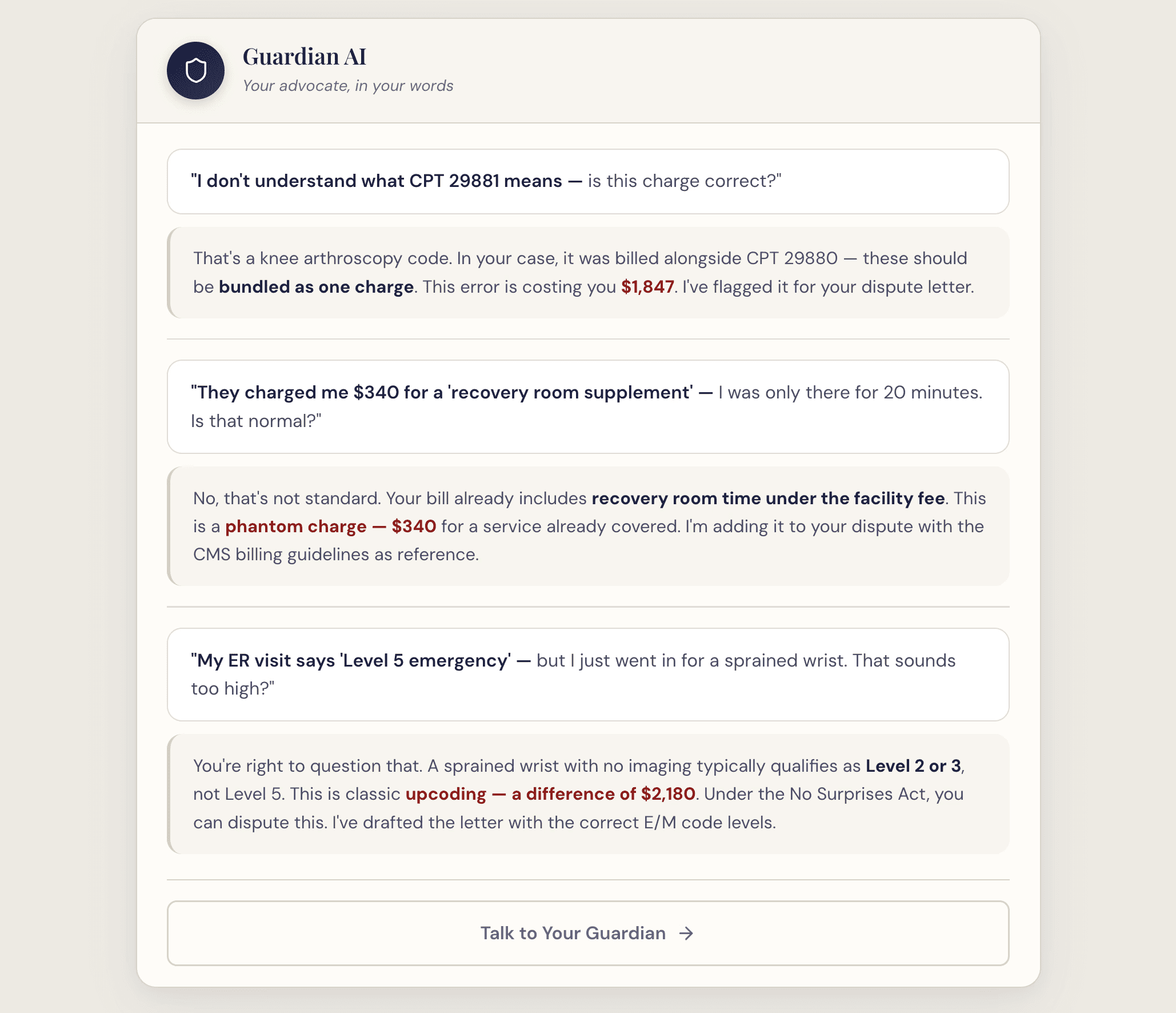
The 7 services cover the full patient journey: understanding a bill, decoding insurance benefits, preparing for a visit, translating records, analyzing prescriptions, navigating prior authorization, and getting a second opinion. Guardian sits across all of them as the conversational layer.
Legal compliance was its own workstream. I used Claude to research healthcare communication standards, minimize ambiguous language, and draft disclaimers, clarifying that the service doesn't replace a doctor, adding emergency guidance where needed, and preparing privacy policies, terms and conditions, and FAQs.
IN ACTION
Two core workflows, from document upload to final audit. No demo data, no staging environment. This is the live platform. Every interaction is powered by the Anthropic API in real time.
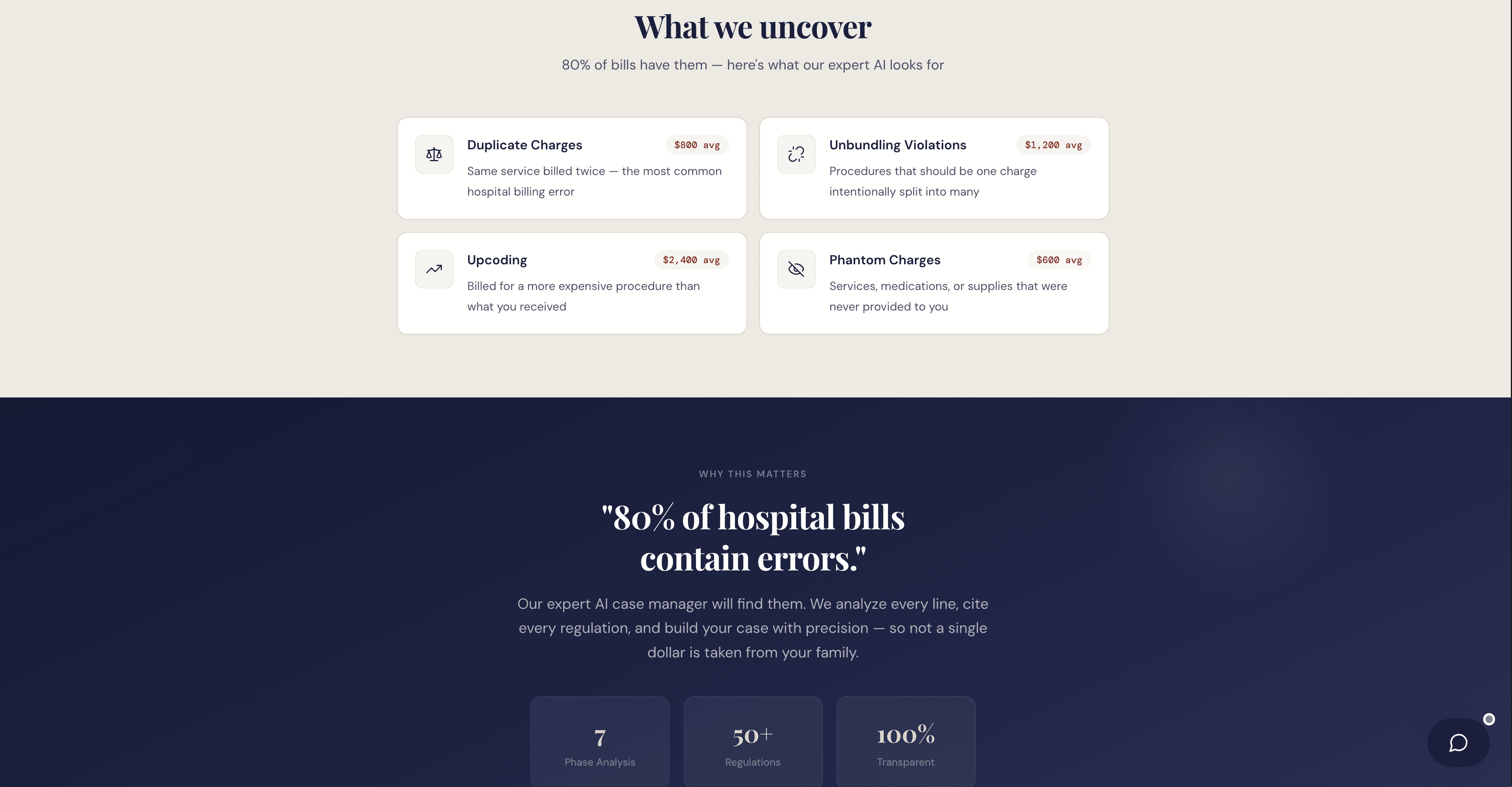
WHAT THE AI LOOKS FOR
Duplicate charges, unbundling violations, upcoding, phantom charges. The four most common hospital billing errors, averaging $800 to $2,400 each.
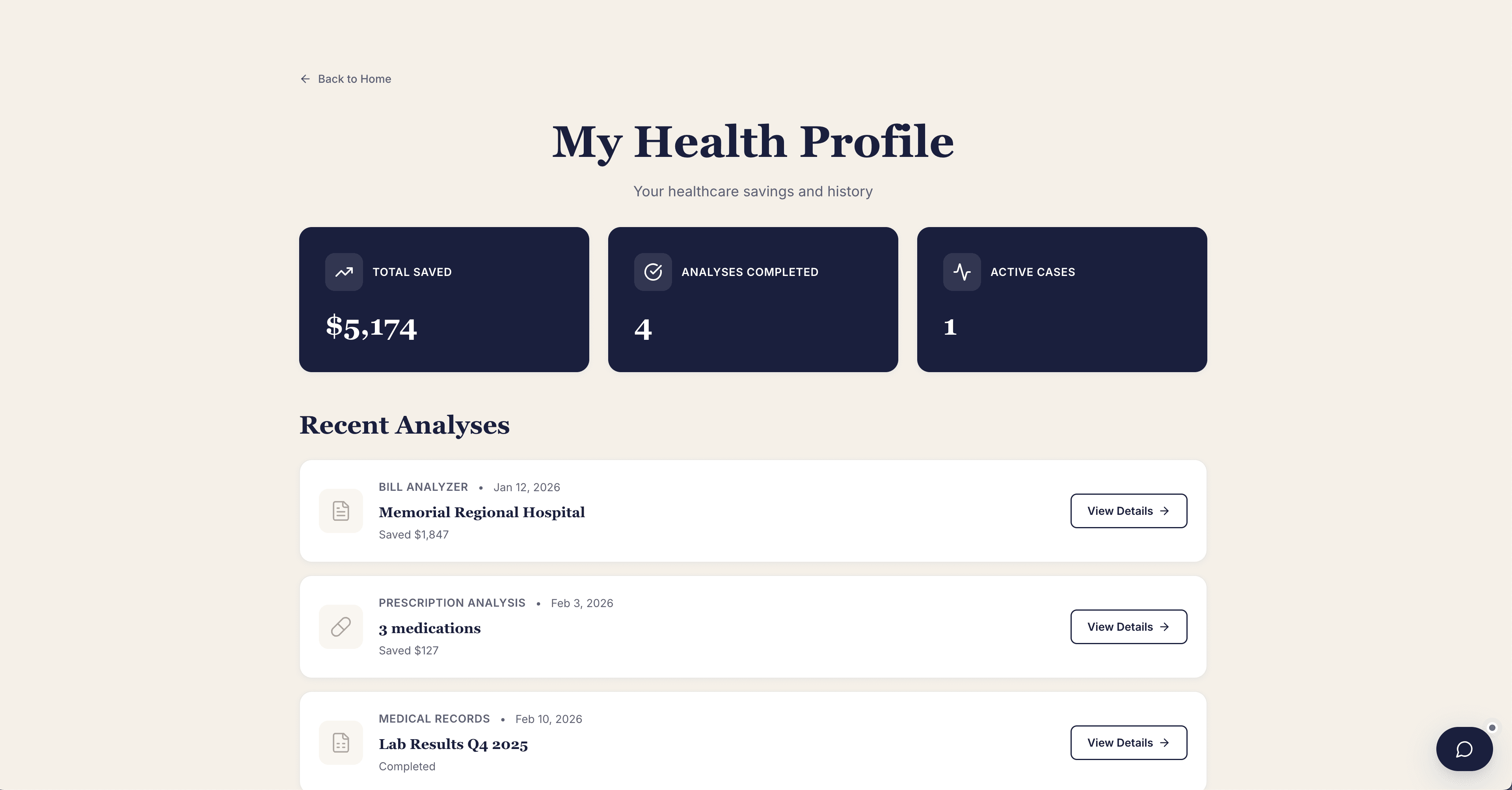
YOUR RESULTS
Four analyses, $5,174 saved. The dashboard tracks cumulative savings across every service used.
THE IMPACT
AI-powered services
Gross margin
API cost per individual analysis
One thing that really sticks out to me is his product taste. This guy actually has some really solid Product Manager skills. He quickly grasped all the concepts and was designing components that could easily compete or beat all established incumbents in terms of UX.
-Brian Lai,
Software Engineer, stackit
REFLECTION
Bolt.new doesn't do magic. The output is proportional to the clarity of the input: how well you've defined the user, the use case, and the expected behavior.
The real shift happens when your words become a working interface. Not perfect, but functional and close enough to be a real starting point.
The hardest part wasn't the AI. It was consistency across 7 services. Each one had different functionality, different logic, different edge cases. Some components replicated across all sections but needed to behave differently depending on context. Maintaining coherence across that scope required the same discipline as any complex design system.
The connections to Netlify, Stripe, and Supabase were surprisingly fast to implement. A vague explanation produces a poor result. The designer's job shifts from creating visual ideas to building the mental model first.